RBI Holds Repo at 4.00%: Dalal Street Gets Cheap Money, Not a Free Lunch
The rate pause steadies the borrowing-cost table, while inflation keeps the dessert menu under review.
Editorial visual documentation covering developments in RBI Holds Repo at 4.00%: Dalal Street Gets Cheap Money, Not a Free Lunch.
Core Investigation Takeaways & Order Highlights
The RBI’s decision to keep the repo rate at 4.00% gave Dalal Street a familiar headline and no immediate change to the cost of central-bank borrowing. Traders looking for a surprise were handed a policy pause instead—a little like ordering spicy market action and getting the same thali, reheated. The key cue is not merely the unchanged rate, but the RBI’s accompanying assessment of inflation, growth and liquidity, which shapes expectations for the next move.
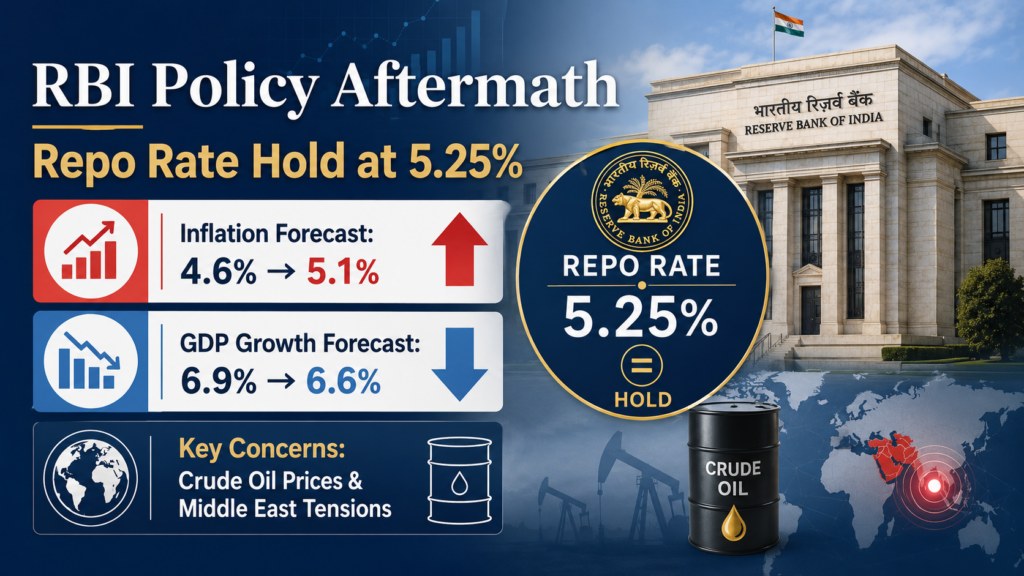
Market intelligence and exchange telemetry for MAJOR DEVELOPMENT.
Rate-sensitive counters may find a supportive backdrop: lower borrowing costs can help home-loan demand, vehicle financing and corporate interest expenses, putting banks, real estate and auto names such as HDFC Bank, SBI, Maruti Suzuki and DLF on investors’ watchlists. But a repo hold is not a guaranteed buy signal. Bond yields, deposit costs, credit quality and loan growth still matter. FII and DII flows should be checked against exchange disclosures; the rate announcement itself proves neither buying nor selling.
For the next session, traders should watch the Nifty and Bank Nifty against their own recent support and resistance zones rather than inventing magic levels from a policy headline. A steady repo can help sentiment, but persistent inflation, rupee weakness, rising global yields or a crude-price spike can quickly reclaim the microphone. Long-term borrowers should compare actual loan terms and reset clauses, while equity investors should track RBI minutes and inflation data before betting on a rate-cut cycle.

Regulatory framework and official market disclosure documentation.
Strategic Action Plan & Risk Discipline for Dalal Street Traders
Key institutional execution guidelines and risk parameters for managing exposure amidst current market developments:
- 1Size positions to a predefined stop-loss; an unchanged repo rate is a catalyst, not a promise of upside.
- 2For rate-sensitive stocks, assess valuation, loan growth, funding costs and asset quality alongside policy signals.
- 3Watch inflation, government bond yields, USD/INR and crude prices for risks that could outweigh the rate pause.
- 4Verify policy statements and meeting documents at rbi.org.in, and market disclosures and trading data at nseindia.com or bseindia.com.